




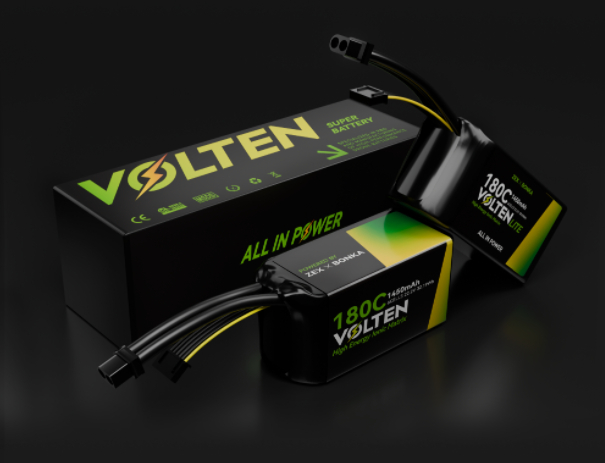
How to Choose a 6S LiPo Battery for a 5-Inch FPV Drone (2026 Guide)
If you fly a 5-inch FPV drone, a 6S LiPo battery is no longer “optional” — it is the modern standard for freestyle, racing, cinematic cruising, and aggressive bando flying. Compared with 4S setups, 6S delivers:
- Lower voltage sag
- Smoother throttle response
- Higher efficiency
- More consistent power throughout the flight
- Better motor performance under heavy load
But choosing the right 6S battery capacity matters just as much as choosing 6S itself.
A 1450mAh pack feels completely different from a 1750mAh pack — even if both use high-performance 180C cells.
This guide breaks down:
- Which 6S battery is best for your flying style
- How battery weight changes quad handling
- Flight time expectations
- Voltage sag behavior
- Freestyle vs racing battery recommendations
- Pro tuning and battery management tips
Quick Answer: Which 6S Battery Should You Choose?
| Capacity | Best For | Flight Feel | Estimated Flight Time |
|---|---|---|---|
| 1450mAh 6S 180C | Racing / Ultra-Light Freestyle | Extremely agile | 2–2.5 min |
| 1550mAh 6S 180C | Everyday Freestyle | Balanced & predictable | 3–4 min |
| 1650mAh 6S 180C | Aggressive Freestyle / Bando | Powerful & stable | 4–5 min |
| 1750mAh 6S 180C | Cinematic / Long Range | Smooth & floaty | 5+ min |
👉 If you are unsure, start with a 1550mAh 6S pack. It remains the best all-around option for most 5-inch FPV pilots.
The Golden Formula: Weight vs Flight Time
In FPV, every gram matters.
A lighter battery:
- Improves roll responsiveness
- Makes direction changes faster
- Reduces inertia in crashes
- Feels more “locked-in.”
A heavier battery:
- Increases flight time
- Carries momentum better
- Improves smooth cinematic lines
- Helps with throttle consistency
The tradeoff is simple:
More capacity = More weight = More flight time, but less agility
For 5-inch FPV drones, battery choice directly affects:
- PID tuning feel
- Motor temperature
- Propwash handling
- Cornering speed
- Recovery after dives
1. 1450mAh 6S 180C — The Racer’s Weapon
Best For
- FPV racing
- Lightweight freestyle builds
- Pilots prioritizing agility
Why Pilots Love It
The 1450mAh pack keeps total AUW (all-up weight) low, which transforms your quad into an ultra-responsive machine.
Expect:
- Faster roll rates
- Quicker snap recovery
- Reduced propwash
- Explosive throttle response
This is the battery choice for pilots chasing:
- Faster race laps
- Tight gaps
- Precision freestyle
Pros
- Lowest weight
- Sharpest handling
- Minimal inertia
- Excellent for high-KV setups
Cons
- Shortest flight time
- Less forgiving throttle management
- Requires disciplined landing timing
Estimated Flight Time
- Aggressive freestyle: ~2 min
- Racing: ~1.5–2 min
- Light cruising: ~2.5 min
Recommended Setup Pairing
For ultra-light performance builds:
- Mini FC
- Mini ESC
- 1450mAh 6S 180C battery
👉 Looking for a lightweight racing combo? Explore our 5-inch racing electronics bundle optimized for 1450mAh setups.
2. 1550mAh 6S 180C — The Daily Driver Sweet Spot
Best For
- Everyday freestyle
- Beginner-to-advanced pilots
- Standard 5-inch builds
The 1550mAh battery became the industry standard for a reason.
It delivers:
- Excellent center of gravity
- Balanced weight distribution
- Strong punch without feeling heavy
- Reliable 3–4 minute sessions
For most pilots, this is the safest and smartest choice.
Why It Works So Well
A 1550mAh pack provides:
- Enough current for aggressive throttle punches
- Manageable weight for freestyle
- Stable voltage throughout the flight
This makes tuning easier and flight characteristics more predictable.
Pros
- Best overall balance
- Works with nearly every 5-inch frame
- Consistent flight behavior
- Great battery efficiency
Cons
- No major weaknesses
- Not specialized for extreme racing or cinematic endurance
Estimated Flight Time
- Freestyle: 3–4 min
- Cruising: 4+ min
Recommended Setup Pairing
For balanced freestyle:
- FC + 65A ESC
- 1550mAh 6S 180C battery
👉 Build your everyday freestyle quad here — see our recommended all-round FPV power system.
3. 1650mAh 6S 180C — The Freestyle Powerhouse
Best For
- Aggressive freestyle
- Heavy freestyle frames
- Concrete bando flying
- High-throttle tricks
Modern freestyle builds are heavier than ever:
- HD systems
- CNC camera cages
- Full-size action cameras
- Reinforced arms
The 1650mAh pack compensates with:
- Longer punch consistency
- Better sustained power
- Improved recovery during dives
What Changes in Flight Feel?
Compared with 1550mAh:
- More stable at high speed
- Slightly slower directional changes
- Better momentum retention
- More “locked-in” feeling
This is excellent for:
- Matty flips
- Long power loops
- High-speed dives
Pros
- Excellent sustained current delivery
- Longer freestyle sessions
- Better end-of-pack performance
Cons
- Increased weight noticeable in tight corners
- Slightly more inertia during crashes
Estimated Flight Time
- Aggressive freestyle: 4–5 min
Recommended Setup Pairing
For hard freestyle and bando builds:
- FC + 80A ESC
- 1650mAh 6S 180C battery
👉 See our freestyle-ready 80A stack combo built for high-current 6S power delivery.
4. 1750mAh 6S 180C — Cinematic & Long-Range Choice
Best For
- Cinematic FPV
- Mid-range cruising
- GoPro carrying
- Smooth mountain surfing
The 1750mAh pack prioritizes endurance over aggression.
You gain:
- Longer airtime
- Better efficiency
- Smoother throttle behavior
- Stable cinematic lines
This setup shines when:
- Flying scenic environments
- Chasing cars
- Shooting smooth footage
- Running heavier HD builds
Pros
- Longest flight time
- Excellent for heavy rigs
- Stable cruising behavior
Cons
- Reduced agility
- Floatier freestyle feel
- More momentum in crashes
Estimated Flight Time
- Smooth cruising: 5–7 min
- Cinematic flying: 5+ min
Recommended Setup Pairing
For cinematic and endurance rigs:
- FC Pro + 80A ESC
- 1750mAh 6S 180C battery
👉 Explore our cinematic FPV power combo optimized for long-range stability and HD payloads.
Why 180C Matters on a 6S FPV Battery
Most pilots focus only on capacity.
But the C-rating dramatically changes real-world performance.
A true 180C LiPo battery offers:
Lower Voltage Sag
Even at:
- Full throttle
- High current spikes
- Low remaining capacity
…the battery maintains voltage stability longer.
This means:
- More consistent throttle feel
- Better motor response
- Reduced early low-voltage warnings
Cooler Operating Temperatures
High-C cells usually have:
- Lower internal resistance (IR)
- Better heat management
- Improved cycle longevity
Lower heat means:
- Less battery puffing
- Better lifespan
- More reliable performance over time
Pro Tips for Managing 6S LiPo Batteries
1. Adjust Your Center of Gravity (CG)
Switching from:
- 1450mAh → 1750mAh
…can noticeably shift balance.
Always reposition the battery so the quad remains centered.
This improves:
- Cornering
- Pitch authority
- Mid-air stability
2. Set Smarter Voltage Warnings
High-performance 180C packs hold voltage longer.
But once voltage drops, it drops quickly.
Recommended OSD warning:
Landing earlier protects:
- Cell health
- Cycle lifespan
- Voltage consistency
3. Always Storage Charge Your Packs
Never leave LiPos:
- Fully charged
- Fully discharged
…for extended periods.
Recommended storage voltage:
This dramatically extends battery lifespan.
Final Recommendation: Which 6S Battery Should You Buy?
Choose 1450mAh If:
- You race competitively
- You prefer ultra-light freestyle
- Maximum agility matters most
Choose 1550mAh If:
- You want the safest all-around option
- You fly freestyle daily
- You want balanced tuning
Choose 1650mAh If:
- You fly aggressive freestyle
- Your build is heavier
- You want stronger end-of-pack punch
Choose 1750mAh If:
- You shoot cinematic footage
- You cruise long distances
- You carry HD cameras
Frequently Asked Questions (FAQ)
Is 6S better than 4S for a 5-inch FPV drone?
Yes. 6S provides:
- Better efficiency
- Lower amp draw
- Reduced voltage sag
- More consistent power delivery
Most modern 5-inch freestyle drones are optimized for 6S.
What is the best 6S battery size for beginners?
For beginners, 1550mAh 6S is usually the best choice because it balances:
- Flight time
- Weight
- Stability
- Tuning feel
Does higher mAh always mean longer flight time?
Generally yes — but increased weight also reduces efficiency.
That is why battery selection is always a balance between:
- Capacity
- Weight
- Flying style
Share:
AM32 vs BLHeli_32: FPV ESC Firmware Comparison Guide (2026)